Ruaa Centre Launches Training Course on Eco-Friendly Bag Production to Protect Sea Turtle Hatchlings

23rd August 2026
Ruaa Centre for Strategic Studies, Consulting and Training today, Sunday, launched a training course entitled “Eco-Friendly Bag Production: Practical Alternatives to Reducing the Use of Plastic Bags”, as part of the “Coastal Women Leaders” project, with support from the Urgent Action Fund (UAF) and in coordination with the General Authority for Environmental Protection.
The training course forms part of an urgent environmental intervention aimed at addressing one of the growing threats to coastal and marine ecosystems, particularly sea turtle hatchlings, which face multiple risks during their early stages of life, including plastic waste and discarded bags accumulating along beaches and nesting sites.
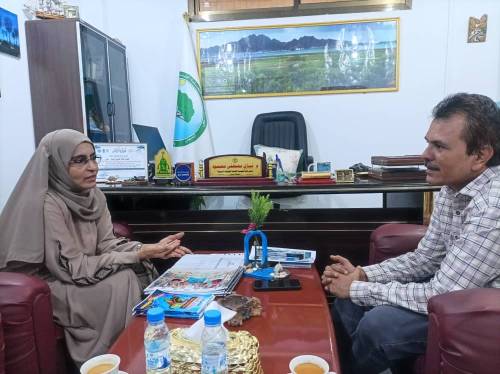
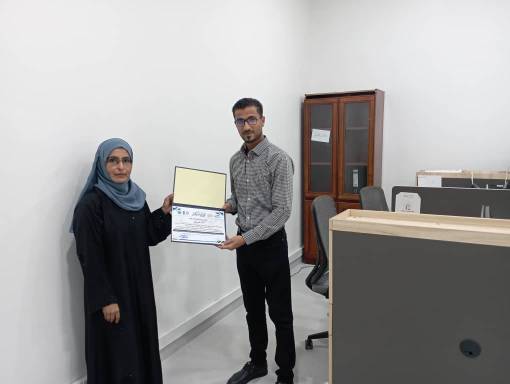
At the opening session, Dr Jaklin Al-Batani, Head of Ruaa Centre, welcomed the participants and emphasised that protecting sea turtle hatchlings requires practical and urgent responses that go beyond awareness-raising to address sources of environmental threats and provide viable alternatives that can be adopted at community level.
Dr Al-Batani noted that sea turtle hatchlings represent one of the most vulnerable stages in the turtles’ life cycle. Plastic waste scattered along beaches can impede their movement and increase the risks they face as they make their way to the sea. She underscored the important role of women and local communities in taking practical action to reduce these threats.
She encouraged participants to make the most of both the theoretical and practical components of the training and to translate the skills they acquire into sustainable practices and practical alternatives that can help reduce reliance on plastic bags within their communities.
For his part, Dr Jamal Bawazir, Head of the Environmental Unit at the Centre, delivered a lecture on the risks of plastic pollution to the marine environment and its impacts on sea turtles and their habitats. He highlighted the importance of moving beyond awareness of the problem towards practical solutions that reduce the amount of plastic waste reaching beaches and marine environments.
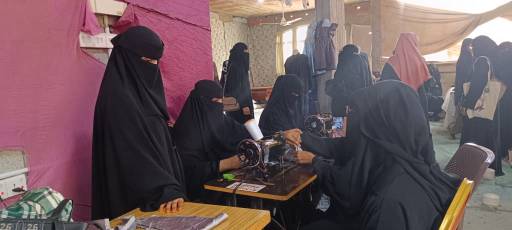
On the first day of the course, which runs from 23 to 26 August, participants received hands-on training in the basic steps of producing reusable fabric bags, led by trainer Nathra Al-Eisai. The training covered the selection of suitable fabrics, bag design, and techniques for cutting and sewing bags in the required shapes and designs.
The course aims to equip participants with practical skills that enable them to produce environmentally friendly alternatives and contribute to reducing the use of plastic bags. It also seeks to strengthen women’s role in responding to urgent environmental risks and support efforts to protect coastal and marine environments, particularly by creating safer conditions for sea turtle hatchlings and increasing their chances of reaching the sea safely.
This intervention forms part of the “Coastal Women Leaders” project’s broader approach to empowering women to lead local initiatives with a direct environmental impact, transforming awareness of the risks facing marine ecosystems into practical and sustainable community-based solutions.